Introduction:
GIK Institute has partnered with several NGOs and government organizations to address SDG-related challenges. Through collaborations with organizations like the Red Crescent, Teach for Pakistan, and Akhuwat Foundation, the university engages in discussions that help bridge the gap between academic research and practical, on-the-ground solutions. These collaborations often take the form of workshops, community projects, and policy discussions that focus on specific SDGs such as poverty alleviation, education, and healthcare.
The GIK Institute is actively engaged in shaping Sustainable Development Goals (SDG) policies at both national and regional levels, often collaborating with government bodies and non-governmental organizations. This involvement spans a range of activities, including identifying key issues and challenges, developing and refining policy frameworks, forecasting outcomes with and without specific interventions, monitoring and reporting on the effectiveness of these interventions, and supporting adaptive management strategies to ensure ongoing effectiveness.
Swarm DC Grid for Rural Electrification in Topi Region – Pakistan, This initiative is one of its kind and proudly the only project selected from hashtag#Pakistan under this prestigious platform. Our work focuses on leveraging DC NanoGrid technology to provide sustainable and efficient energy solutions for rural communities.
Faculty of Electrical Engineering Secures Prestigious IEEE Grants for Innovative Community Projects. “Swarm DC Grid for Rural Electrification in Topi Region, Pakistan” Awarded by the IEEE Industry Applications Society (IAS) as part of the EPICS in IEEE initiative, this project focuses on building a scalable and efficient DC-nano grid to provide reliable, affordable electricity to rural areas in Topi. Utilizing solar power and battery energy storage systems, the project envisions interconnected grids for optimal energy sharing and utilization. Community involvement is at the heart of this project, with plans to train local residents in grid deployment and maintenance, ensuring long-term sustainability and local ownership.
GIKI, Al Baraka Bank Pakistan Ltd., and WWF – Pakistan launched a New Monsoon Plantation Drive to plant 10,000 saplings at GIK Institute
Empowering Tech: Building Ethical, Inclusive, and AI-Ready Engineers for a Resilient Tomorrow.” IEEE Region 10 Student Summit 2025

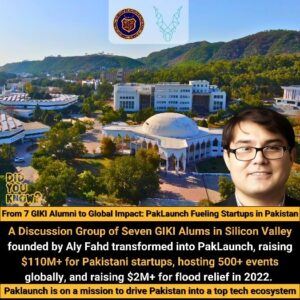
PakLaunch
The evolution of PakLaunch, founded by a group of GIKI alumni in Silicon Valley, demonstrates the strong global impact of GIKI’s entrepreneurial ecosystem and alumni network. What began as a small discussion group has grown into a major platform that has supported Pakistani startups in raising over $110M in funding, organized 500+ global events, and mobilized more than $2M for flood relief in 2022. This initiative highlights how alumni-driven collaboration can generate significant economic opportunities, strengthen startup ecosystems, and support inclusive growth. By connecting investors, entrepreneurs, and diaspora professionals across borders, PakLaunch exemplifies effective multi-stakeholder engagement and international cooperation, directly contributing to SDG 8 through entrepreneurship and economic development, and SDG 17 through global partnerships and knowledge-sharing networks.
https://www.facebook.com/photo.php?fbid=1066426468845739&set=pb.100064351887024.-2207520000&type=3

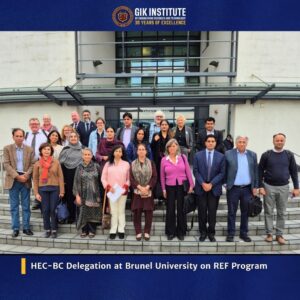
Research Excellence Framework (REF)
A delegation from the Higher Education Commission (HEC) and British Council (BC), including representatives from GIKI, visited Brunel University to gain insights into the UK’s Research Excellence Framework (REF) and explore best practices in research evaluation and quality assurance. The engagement focused on strengthening Pakistan’s higher education quality systems through learning from international benchmarks in research assessment, funding mechanisms, and academic performance standards.
This initiative aligns with SDG 4 by enhancing the quality and effectiveness of higher education systems through improved research governance, and with SDG 17 by fostering international collaboration and knowledge exchange between Pakistan and UK institutions to strengthen academic capacity and research excellence.

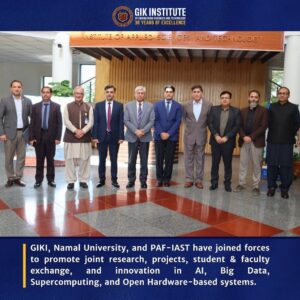
GIKI x Namal University, Mianwali x Pak-Austria Fachhochschule Institute of Applied Sciences and Technology MoU
Ghulam Ishaq Khan Institute of Engineering Sciences and Technology (GIKI) signed Memoranda of Understanding with Namal University, Mianwali, and Pak-Austria Fachhochschule Institute of Applied Sciences and Technology to strengthen academic collaboration, research linkages, and institutional capacity building. The partnerships aim to promote student and faculty exchange, joint research initiatives, and shared learning opportunities across engineering, science, and technology domains.
This initiative aligns with SDG 4 by enhancing access to high-quality education through academic cooperation and resource sharing, and with SDG 17 by fostering strong inter-university partnerships that promote knowledge exchange, innovation, and collective progress in higher education.

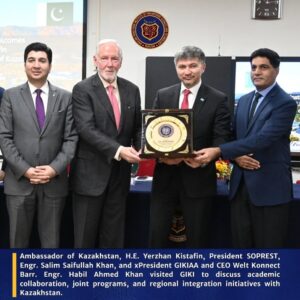
Ambassador of Kazakhstan visited GIKI
Ghulam Ishaq Khan Institute (GIKI) hosted H.E. Yerzhan Kistafin, Ambassador of Kazakhstan, along with academic and institutional leaders to strengthen academic collaboration and regional integration through joint research, student exchange programs, and potential dual-degree initiatives with leading Kazakh universities. The engagement also included discussions on enhanced mobility and fast-track visa facilitation for students and faculty, alongside visits to GIKI’s advanced labs and learning facilities. This initiative aligns with SDG 4 (Quality Education) by expanding global learning and research opportunities, and SDG 17 (Partnerships for the Goals) by fostering strong international academic linkages and long-term cooperation between Pakistan and Kazakhstan in higher education and innovation.

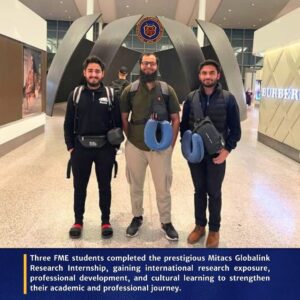
Mitacs Globalink Research Internship
FME students Sher Jan, Zulkifal, and Yasir Zaman successfully completed the Mitacs Globalink Research Internship, where they engaged in advanced research, gained international exposure, and strengthened their academic and professional skills. Their achievement reflects GIKI’s commitment to global learning opportunities and research excellence. This aligns with SDG 4 (Quality Education) by promoting experiential and research-based learning, and SDG 17 (Partnerships for the Goals) by fostering international academic collaboration and knowledge exchange through global research programs.

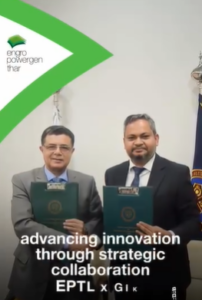
Engro Group x GIKI collaboration:
Engro Powergen Thar Limited (EPTL) and GIKI have teamed up to bridge the gap between industry and academia. From joint research in plant monitoring to exploring new uses for coal by-products, this partnership will facilitate real-world learning, innovation and shaping a brighter energy future for Pakistan.
https://www.instagram.com/reel/DKHVee4IdY2/

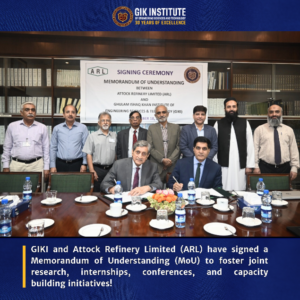
Ghulam Ishaq Khan Institute of Engineering Sciences and Technology (GIKI) and Attock Refinery Limited (ARL) have signed a Memorandum of Understanding (MoU) to foster joint research, internships, conferences, and capacity-building initiatives
https://giki.edu.pk/2025/09/20/ghulam-ishaq-khan-institute-of-engineering-sciences-and-technology-giki-and-attock-refinery-limited-arl-have-signed-a-memorandum-of-understanding-mou-to-foster-joint-research-internships-confe/

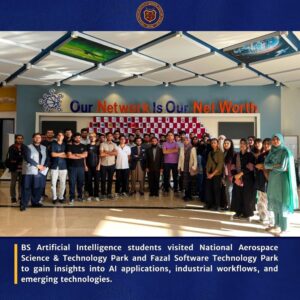
BS Artificial Intelligence students visited National Aerospace Science & Technology Park and Fazal Software Technology Park to gain insights into AI applications, industrial workflows, and emerging technologies.

https://giki.edu.pk/2025/10/19/bs-artificial-intelligence-students-visited-national-aerospace-science-technology-park-and-fazal-software-technology-park-to-gain-insights-into-ai-applications-industrial-workflows-and-emergin/
MoU Signing with Power Planning & Monitoring Commission (PPMC)
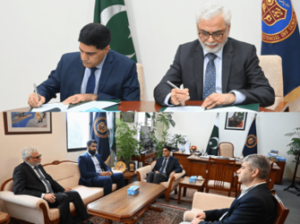
A delegation of 4–5 officials from the Power Planning & Monitoring Commission (PPMC), led by Mr. Tufail Shaik (Chief Technical Services), visited the GIK Institute on Thursday, 7th August 2025 for the signing of a Memorandum of Understanding (MoU).

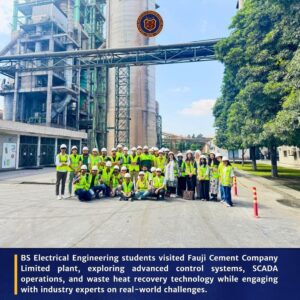
BS Electrical Engineering students visited Fauji Cement Company Limited plant, exploring advanced control systems, SCADA operations, and waste heat recovery technology while engaging with industry experts on real-world challenges.

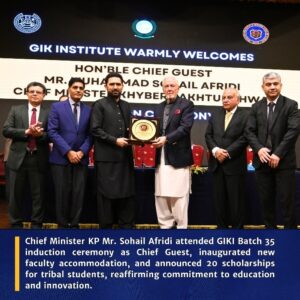
Chief Minister KP Mr. Sohail Afridi attended GIKI Batch 35 induction ceremony as Chief Guest, inaugurated new faculty accommodation, and announced 20 scholarships for tribal students, reaffirming commitment to education and innovation.
GIKI’s infrastructure and sustainability initiatives are further strengthened through active collaboration with government leadership and regional stakeholders. A notable example was the visit of Sohail Afridi during the induction ceremony of Batch 35, where he inaugurated newly developed faculty accommodation facilities and announced 20 scholarships for students from tribal districts. This initiative reinforced the institute’s commitment to inclusive education, sustainable campus expansion, regional capacity building, and innovation-driven development.

Engro Powergen Thar Limited x GIKI
Ghulam Ishaq Khan Institute of Engineering Sciences and Technology and Engro Powergen Thar Limited (EPTL) have signed a memorandum of understanding (MoU to jointly explore research and innovation opportunities related to the utilisation of fly ash produced from the Thar Coal Power Project.
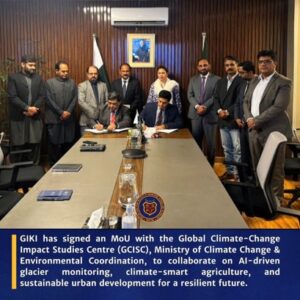
GIKI and GCISC sign MoU for climate research and sustainable development
GIKI contributes to sustainable water resource management through research and innovation focused on climate resilience, glacier monitoring, and water security. Through its Memorandum of Understanding (MoU) with Global Climate-Change Impact Studies Centre (GCISC), GIKI is advancing research in AI-enabled glacier monitoring, remote sensing, and climate analytics. Since glaciers are a primary source of freshwater for Pakistan’s river systems, monitoring glacier dynamics is essential for understanding future water availability, flood risks, and drought conditions. The collaboration supports the development of data-driven solutions for water resource planning, climate adaptation, and sustainable management of freshwater resources. Furthermore, research on climate-smart agriculture contributes to improving water-use efficiency and promoting sustainable agricultural practices in water-stressed regions.

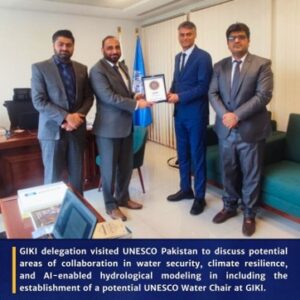
GIKI Delegation Meets UNESCO Pakistan on Water Security and Climate Resilience
GIKI contributes to sustainable water management through research, innovation, and capacity building in the field of water resources and climate resilience. A significant example is the engagement of the Department of Civil Engineering with UNESCO Pakistan to explore the establishment of a UNESCO Water Chair at GIKI focused on artificial intelligence (AI) and cloud-enabled hydrological modeling. The proposed initiative aims to advance sustainable water management, improve water security, strengthen climate adaptation strategies, and support evidence-based decision-making for water resource planning. Through the application of advanced digital technologies, hydrological modeling, and climate analytics, GIKI seeks to develop innovative solutions to address Pakistan’s growing water challenges and contribute to national and regional water sustainability goals.

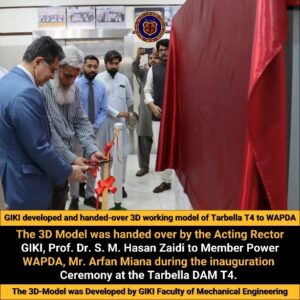
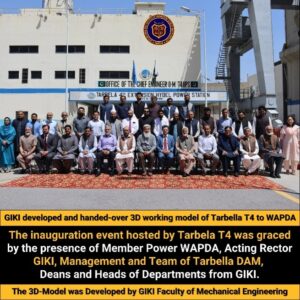
Tarbela 4th Extension Hydropower Project: GIKI hands over 3D model to Wapda
GIKI contributes to sustainable water resource management through research, innovation, and technical collaboration related to hydropower and water infrastructure. A notable example is the development of a 3D working educational model of the Tarbela 4th Extension Hydel Power Station by the Faculty of Mechanical Engineering in collaboration with WAPDA. The model provides a detailed representation of the entire hydropower system, including the reservoir, tunnels, inlet valves, turbines, and water flow mechanisms. By enhancing understanding of large-scale water resource utilization and hydropower generation, the project supports education and capacity building in sustainable water management, renewable energy production, and integrated water-resource planning. The model serves as a valuable learning tool for engineers, students, and visitors, promoting awareness of the role of water infrastructure in sustainable development.

Collaborations with WWF Pakistan, UNDP Pakistan, and local environmental bodies strengthen research, policy development, and community outreach for sustainable water and environmental management.
https://www.facebook.com/watch/?v=1714219206082743
Prof. Dr. Fazal Khalid, Rector GIKI participated in the Pre-Conference at AIOU Roundtable AI and Academic Integrity: Navigating Ethical Issues in Education
Prof. Dr. Fazal Khalid, Rector of Ghulam Ishaq Khan Institute (GIKI), participated in the Pre-Conference at Allama Iqbal Open University (AIOU) on the roundtable discussion “AI and Academic Integrity: Navigating Ethical Issues in Education.” This event focused on the ethical challenges that artificial intelligence (AI) presents in the context of education, particularly in maintaining academic integrity, fairness, and transparency in the use of AI tools for learning and assessment. Prof. Dr. Khalid’s participation in this discussion aligns with Sustainable Development Goal (SDG) 17, which emphasizes “Partnerships for the Goals.” SDG 17 highlights the importance of strengthening partnerships and fostering collaboration among institutions, governments, and other stakeholders to address global challenges, including those related to technology in education. By engaging in dialogues on the ethical use of AI, Prof. Dr. Khalid’s involvement supports the idea that collaboration between universities, policymakers, and the tech industry is crucial to ensuring that AI is used responsibly in educational settings. This, in turn, can help create a more equitable and ethical educational environment that benefits all learners, ensuring that AI technologies enhance rather than undermine academic integrity and promote shared knowledge.

GIKI Delegation led by Rector, Prof. Dr. Fazal Khalid visited Atlas Honda. Both teams discussed progress on joint Research and Development Projects. Establishment of EV Lab and collaboration on SDGs was also discussed.
A GIKI delegation, led by Rector Prof. Dr. Fazal Khalid, visited Atlas Honda to discuss the progress of joint research and development (R&D) projects between the two institutions. The meeting highlighted significant advancements, including the establishment of an Electric Vehicle (EV) Lab, a step toward sustainable transportation solutions. In addition, both teams discussed potential collaborations on the Sustainable Development Goals (SDGs), with a particular focus on innovation and technology-driven solutions. This visit and the ongoing collaboration directly link to SDG 17: Partnerships for the Goals, which emphasizes the importance of fostering partnerships and collaborative efforts to achieve sustainable development. The collaboration between GIKI and Atlas Honda exemplifies how universities and industries can work together to accelerate research, innovation, and technological solutions that support sustainability, including in areas like clean energy, green technologies, and sustainable mobility. By strengthening such partnerships, the two organizations aim to make meaningful contributions to SDGs, particularly those related to affordable clean energy (SDG 7), sustainable industry and innovation (SDG 9), and climate action (SDG 13).

GIKI and RMI signed an MOU to collaborate on developing advanced Artificial Intelligence (AI) tools to enhance the early detection and diagnosis of breast cancer.
Ghulam Ishaq Khan Institute (GIKI) and the RMI (Rehman Medical Institute) signed a Memorandum of Understanding (MOU) to collaborate on developing advanced Artificial Intelligence (AI) tools aimed at enhancing the early detection and diagnosis of breast cancer. This partnership aligns with Sustainable Development Goal (SDG) 17: Partnerships for the Goals, which emphasizes the importance of fostering multi-stakeholder collaborations to achieve sustainable development. By combining GIKI’s expertise in AI and technology with RMI’s medical and healthcare knowledge, this collaboration exemplifies how universities and healthcare institutions can work together to tackle critical health challenges. The development of AI-powered diagnostic tools will not only improve healthcare outcomes but also contribute to SDGs related to good health and well-being (SDG 3) by making early detection of breast cancer more accessible, efficient, and accurate. This partnership also demonstrates how innovation-driven collaboration can lead to significant advancements in technology and healthcare, promoting the achievement of global health goals.
Prof. Dr. Fazal Khalid, along with the International Engineering Alliance’s Review Team (IES-ECUK-PEC), visited the Engineering Council in South Africa.
Prof. Dr. Fazal Khalid, along with the International Engineering Alliance’s Review Team (IES-ECUK-PEC), visited the Engineering Council in South Africa to discuss global standards and best practices in engineering education and professional development. This visit and collaboration directly align with Sustainable Development Goal (SDG) 17: Partnerships for the Goals, which emphasizes the importance of fostering global partnerships to achieve sustainable development. By engaging with international engineering bodies such as the Engineering Council of South Africa, the visit underscores the significance of cross-border collaboration in improving education, accreditation, and professional standards in engineering. These efforts contribute to SDG 17 by enhancing the global exchange of knowledge and expertise, ensuring that engineering practices and educational frameworks are aligned with international standards. Such partnerships also support the development of a highly skilled and globally competitive workforce, which is essential for advancing sustainable infrastructure, innovation, and technology across various sectors.

Advanced AI Bootcamps on LLM & DNN concluded at NUST & GIKI in collaboration with SkyElectric, SkyLabs AI and Ashar Aziz Foundation
The advanced AI bootcamps on Large Language Models (LLM) and Deep Neural Networks (DNN) recently concluded at NUST and GIKI in collaboration with SkyElectric, SkyLabs AI, and the Ashar Aziz Foundation. These bootcamps focused on equipping participants with cutting-edge AI skills and knowledge to drive innovation in various sectors. This initiative directly aligns with Sustainable Development Goal (SDG) 17: Partnerships for the Goals, which emphasizes the importance of multi-stakeholder collaborations to achieve sustainable development. By bringing together universities, tech companies, and foundations, this collaboration fosters the exchange of knowledge and expertise to advance technological solutions. The bootcamps also contribute to SDG 9 (Industry, Innovation, and Infrastructure) by promoting the development of high-tech skills and research in artificial intelligence, which is essential for driving innovation, improving industrial productivity, and creating sustainable solutions for societal challenges. This partnership not only strengthens the AI ecosystem but also supports the broader goal of fostering inclusive and innovative education for a sustainable future.

GIKI partners with Atlas Honda for joint research and innovation to develop indigenous solutions for electric vehicles. Atlas Honda gifted their latest electric vehicle bike, the Honda BENLY e, to GIKI.

The Ghulam Ishaq Khan Institute of Engineering Sciences and Technology (GIKI) inaugurated the Ayub Green Technology Centre (AGTC), marking a significant step forward in sustainable energy research and innovation.
The inauguration ceremony was graced by Chief Guest Engr. Salim Saifullah Khan, President of SOPREST and GIKI Board of Governors, and Guest of Honour Dr. Zahid Ayub, CEO of Isotherm Inc., USA. Also present were Dr. Muhammad Zubair, Member of GIKI’s Board of Governors, Prof. Dr. Fazal Ahmad Khalid, and Prof. Dr. S. M. Hasan Zaidi, Acting Rector of GIKI.
Speaking on the occasion, Engr. Salim Saifullah Khan stated: “The establishment of AGTC reflects GIKI’s vision for sustainable technological development. This Centre will serve as a national hub for renewable energy research, addressing Pakistan’s critical energy needs while promoting environmental sustainability.”
Dr. Zahid Ayub remarked: “AGTC represents the evolution of our two-decade-long journey in sustainable technology research. By expanding into solar, wind, and geothermal energy, we create solutions that combine academic excellence with practical applications.” He added, “The establishment of AGTC at GIKI is a timely initiative that will position Pakistan at the forefront of renewable energy research. This Centre will foster innovation and contribute to national energy independence and environmental stewardship.”
The Centre builds upon the legacy of the Natural Fluid and Refrigeration Centre (NFRC), established in 2005 through collaboration between GIKI, ASHRAE, and Isotherm Inc. The newly inaugurated AGTC will focus on cutting-edge renewable energy systems within its 4,075 sq. ft. research facility, with plans for future expansion. Over the years, NFRC has emerged as a pioneering facility in industrial refrigeration and natural refrigerants—completing three major funded projects, publishing over 30 international research papers, and supporting numerous graduate theses.
In his keynote address, Dr. Zahid Ayub reiterated: “AGTC is a continuation of our deep-rooted commitment to green innovation. This Centre will help shape a cleaner, more energy-secure future through homegrown solutions and world-class research.”
Dr. Ahmad Abbas, GIKI’s focal person for AGTC, underscored the importance of the partnership between GIKI and Isotherm Inc. for advancing eco-friendly solutions. He noted that the Centre would serve as a hub for collaborative research initiatives, fostering innovation that directly addresses Pakistan’s environmental and energy policy priorities.
GIK has collaborated through its Project Topi with many NGOs as listed below:
The NGOs include:
The Citizens Foundation (TCF):
Teach for Pakistan (TCF) collaboration to provide free education to deserving students. TCF Alumni School constructed in joint collaboration of GIKI Alumni Association and TCF.
https://www.tcf.org.pk/schools/khyber-paktoonkhwa/giki-alumni-campus/
https://www.tcf.org.pk/about-us/our-journey/
Teach for Pakistan
Project Topi under the GIKI Department of Student Affairs organizes an info session in collaboration with Teach for Pakistan every year. Teach For Pakistan is a dedicated non-profit organization devoted to reshaping the landscape of education in the country. With a mission to provide every child in Pakistan with the chance to excel and envision a brighter future, Teach for Pakistan strives for transformative educational initiatives. The information session, aptly themed “Engaging in Real-Time Conversations with Teach for Pakistan,” delved into exploring avenues for driving meaningful change and empowering the future generation. Participants were encouraged to actively contribute ideas and strategies, fostering a collaborative effort to enhance educational opportunities and outcomes for the benefit of the broader community.
https://www.facebook.com/photo/?fbid=735584321949190&set=a.573649784809312
Project Topi has arranged a session with Teach For Pakistan which is a dedicated non-profit organization committed to transforming the future of education in Pakistan, ensuring every child has the opportunity to shine & a brighter, more equitable Tomorrow!
Red Cresent Welfare Society
Project Topi hosted a blood donation camp in collaboration with the Pakistan Red Crescent Society (PRCS). This is an annual event held in collaboration with Red Cresent Welfare Society (NGO).
https://www.instagram.com/project.topi/p/DAjJpk3upHB/
Collaborations of GIKI Alumni Association:

TCF School GIKI Alumni Campus is providing Quality Education to 150+ children. Rector GIKI, Prof. Dr. Fazal Khalid, One of the TCF GIKI Alumni Campus Leads, Mr. Soban Jalil (GIKI Batch 02) visited the TCF GIKI Alumni Campus.

Alkhidmat Foundation x GIKI
GIK Institute has partnered with Alkhidmat Foundation in providing flood relief efforts in the aftermath of natural disasters, particularly in regions affected by severe flooding. This collaboration combines the university’s resources, student volunteer networks, and technical expertise with Alkhidmat’s established infrastructure and experience in disaster management and humanitarian aid. Together, they have worked on delivering essential supplies such as food, clean water, and medical aid to affected communities. In addition to immediate relief, the collaboration also focuses on long-term recovery efforts, including the rehabilitation of infrastructure and the provision of psychological support to flood victims. Through this partnership, GIK Institute contributes its engineering expertise, particularly in water management and disaster resilience, to help affected communities recover and build resilience against future floods. This initiative aligns with GIK Institute’s commitment to SDG 13 (Climate Action) and SDG 11 (Sustainable Cities and Communities), demonstrating the university’s active role in both providing relief and promoting sustainable solutions to natural disasters.

Akbar Kare x GIKI
Project Topi in collaboration with Akbar Kare Institute (AKI), is thrilled to announce an informative session on “Bridging Healthcare and Engineering for Child Assistive Technology”. This session is aimed at sharing research opportunities lying in Assistive Technology and to collaborate with the Students and Faculty of GIKI in Research and Development of Assistive Technologies.
Collaboration with Tehsil Municipal Administration (TMA) Topi
GIK Institute collaborates with the Tehsil Municipal Administration (TMA) Topi for the collection, transportation, and environmentally responsible disposal of municipal solid waste generated on campus. This partnership strengthens waste management practices and ensures compliance with local environmental regulations.
Collaboration with KP Food Safety and Halal Food Authority
GIKI has partnered with Topi and Swabi Municipality and environmental NGOs such as WWF, KP Food Safety and Halal Food Authority for joint projects. GIK Institute collaborates with local government bodies, municipal authorities, waste management service providers, educational institutions, industry partners, and community stakeholders to strengthen environmental sustainability initiatives and promote responsible waste management practices.